
Son of Priest Unable to Clear JEE Main Gets High Paying Job at Boston Consulting Group
Key Takeaways
- Praveen Sridhar, a Kerala native raised in Delhi, landed a high-paying job at BCG without clearing JEE Main, earning his BTech in mechanical engineering from CUSAT instead.
- His path into robotics and machine learning led him to join the Plaksha Tech Leaders Fellowship for deeper AI/ML learning and leadership development.
- He supplemented his education with free online MOOCs from Stanford, Berkeley, and others, crediting self-learning as key to breaking into data science.
- He cleared BCG's six-round interview process (resume shortlist, coding test, and case-study rounds) and now aims to grow into a CTO-level role while continuing to give back through TinkerHub.
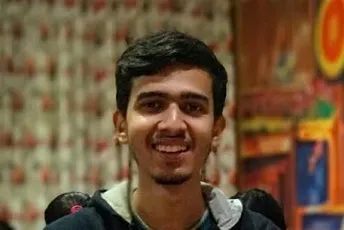
Praveen Sridhar, a native of Kerala cracked six rounds of interviews to get a high-paying job at BCG. It was his robotics and machine learning that took him to new heights.
The son of a priest, 27-year-old Praveen Sridhar, has landed a high paying job in the engineering field without cracking the much-sought-after engineering entrance exam — JEE Main. Sridhar has bagged a high-paying job at the Boston Consulting Group (BCG). A native of Kerala, he grew up in Delhi. After finishing his school at St Mary’s School, Mayur Vihar, he pursued BTech in mechanical engineering from Cochin University of Science and Technology (CUSAT) in Kerala.
It was his keen interest in robotics and machine learning that took him to new heights. “I did not qualify for JEE, which I considered to be a major setback back then, but now that I look back, it doesn’t feel that big of a deal. IITs are of course the most sought after and prestigious institutions and it would really have been a great learning experience, but in the long run, skills matter more than the college one attends,” he says. After studying engineering, he worked as a machine learning engineer across multiple startups.
It was during his research in robotics and programming that he stumbled into machine learning. “Soon after I joined the Plaksha Tech Leaders Fellowship program since I wanted to take a year off work to delve deeper into the different facets of artificial intelligence and ML. Along with that, I really liked the fact that the program focused a lot on leadership potential with an excellent array of both technical and non-technical courses by eminent professors across the world,” he said.
Praveen also took up several free online courses in ML and data science. “It has the most number of good quality free online MOOCs and video lectures from institutes like Stanford, Berkeley, etc, so I believe that it is one of the most accessible fields to get into if one has the dedication to do self-learning,” he added.
Cracked six rounds of interview
The recruitment drive for BCG consisted of a resume shortlisting, followed by an online coding test, explains Praveen. “We had to solve data science-related problems in a fixed amount of time. Once cleared, we had six rounds of interviews primarily involving case studies of applying data science to business problems,” he says.
“The most important factor to performing well in the recruitment process is to have a solid foundation in the subject followed by good practice with case studies,” he shares.
“My immediate plan is to learn as much as possible about applying data science to solve business problems at BCG Gamma. Over the long term, I wish to grow into a CTO level position leading the technology division of an impact-driven company. I also wish to devote more time to TinkerHub and contribute back to the community,” says Praveen about his aspirations.
This article was first published in News 18 on September 07, 2021.
About the Author
The Content Team at Plaksha University leads storytelling, blog and website content, social media, newsletters and event coverage and press and media coverage. The team writes about the University's initiatives, academic programs, research, innovation, and the impact created by the students, faculty, and collaborators and in the process offer readers a closer look at the people and ideas shaping the future of technology education.