
UG Program

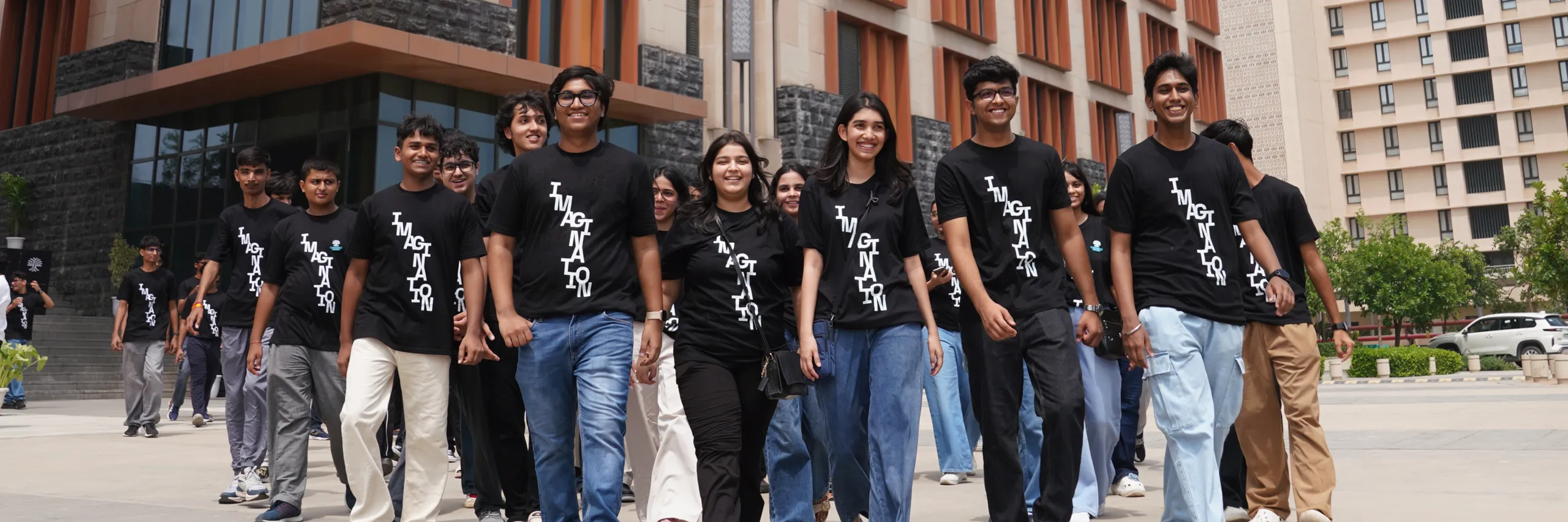
Designed to create ethical leaders who will leverage technology and social sciences to impact organisations and society. Students are prepared to address the grand challenges of India, the region and the world, by developing the necessary technical depth with the cross-disciplinary knowledge of humanities, arts and social sciences.
Four BTech degrees

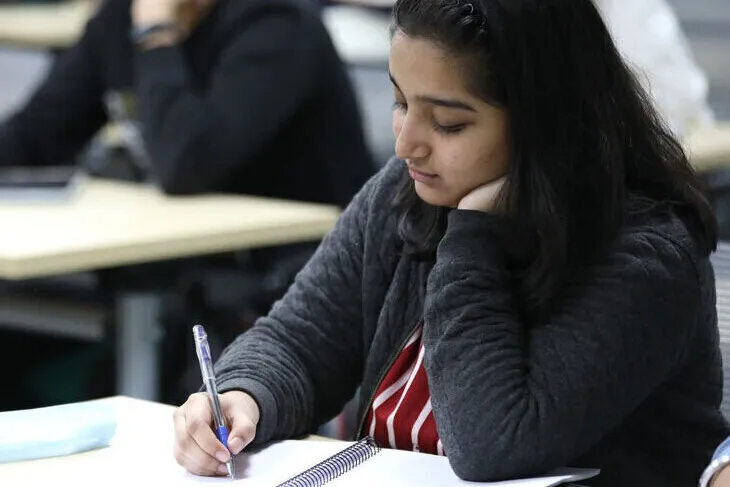
We offer four highly interdisciplinary undergraduate degrees. Each degree is unique, cutting-edge, forward-looking and aligned with the needs of the 21st century and taught by top-notch faculty from across the world.

Student journey

The program has been designed to develop academic depth as well as skill sets and mindsets that will stay with the students through their life, irrespective of the career paths they choose. In each of their 4 years, students will be required to take a few core classes (across disciplines), as well as choose electives in various fields of study.

ADMISSION DETAILS
Year 1

Unlearn, Learn, Relearn

You will embark on an exciting first year where you will unlearn certain old habits (e.g. rote learning), learn new skills and mindsets (e.g. interdisciplinary thinking, maker mindset, teamwork), and rekindle your innate qualities (e.g. curiosity, asking ‘why’, creativity). You will also develop foundational technical, social and humanistic understanding that will be core to every Plakshan.

Year 2

Choose your Path

In the second year, you will continue your process of discovery and play an increasingly active role in charting your journey. You will opt for a major of your choice, and be guided by a faculty advisor in this important decision. Later in the year, you will start to go deeper in your major, and also pick a real-world problem area of your interest.

Year 3

Building Depth

In the third year, you will focus on developing deep expertise in an area, which not only involves building deep knowledge, but also developing the right skill sets to build impactful solutions. You will find yourself connecting the dots through an eclectic mix of classes at the intersection of technology, sciences and liberal arts.

Year 4

Applying your knowledge

This year will be an opportunity to combine your knowledge, passion and skills to go deeper in tackling an inspiring problem area. Working in interdisciplinary teams on a real-world problem at a company, research institution, non-profit or your own start-up, you will also be free to adventure through advanced electives in areas related or unrelated to your major.

Plaksha Freshmore Curriculum

The MS in AI at Plaksha University begins in August 2026 and concludes in August 2027. The course is structured across five terms, including an Industry Immersion Project. A detailed breakdown of the course structure is provided below.

Fundamentals of Computational Thinking

This course provides students with an understanding of the role that computational thinking can play in solving problems. Students are exposed to varied real-world problems and are taught how to approach them and design solutions using Python. In addition to learning key computing skills and concepts, the course focuses on how existing features in programming languages can be used to implement different concepts efficiently and how one can analyze different solutions. After taking the course students are expected to work on real-world projects that require building logical thinking processes that break down complex problems into smaller parts.

Programming & Data Structures

Building on the Python course taught in the previous semester, students are introduced to the Object Oriented Programming (OOP) paradigm and the associated benefits. They learn to write structured and efficient programs in the OOP style. Besides testing and debugging programs, students learn about common data structures, and where and how to apply them to solve computational problems.

Data Science & Artificial Intelligence

This course offers an introduction to the areas of Data Science, Artificial Intelligence, and Machine Learning (DS/AI/ML), combining philosophical, biological, and psychological perspectives with computational design concerns. Students begin the course by understanding the principles underlying learning and how it translates to various applications and categories of AI. Besides multiple classes of models, students are introduced to fundamental concepts in data science that helps them identify, compare and implement solutions to problems. Internal critiques and external perspectives of AI solutions are also discussed to ensure students obtain a holistic view of the challenges and opportunities in this field.

Foundations of Optimization

This course offers a multidisciplinary overview of the field of optimization. Students learn how to formulate an optimization problem, apply different optimization techniques, translate problems into Python and Matlab code, and identify conditions under which each one works best. Students are introduced to numerical, constrained, unconstrained, univariate and multivariate optimization methods and techniques, while also being introduced to topics such as Pareto optimality, multi-objective and global optimization. The final project allows students to apply their knowledge to real-world engineering and business problems.

Critical Thinking & Scientific Reasoning

What are the assumptions and beliefs that we have not examined in the modern age? How do we become aware of our implicit beliefs? What possibilities open up if we investigate and examine our presuppositions? How can we respond to the Grand Challenges of our time, if we don’t know how to think and reason critically? In this course, you will learn to meticulously develop the skill of thinking and enquiring critically, and being able to reason in a scientific, evidence-based manner. The course will focus on sharpening your intellectual abilities so that thinking critically and scientifically becomes a natural way of approaching the world. You will learn how to carefully analyze texts, structure arguments, develop technical reading and writing skills, and communicate your ideas in a coherent and logical manner to different audiences. Additionally, you will also learn to evaluate hypotheses and causal claims, observe and analyze data and patterns, construct reason-based arguments, and draw logical conclusions.

Reimagining Technology & Society

In this course, we will rigorously enquire into the different meanings of the idea of technology and its relationship to society from the perspectives of philosophy, history, social anthropology, human evolution, and civilizational studies. We will look at examples from the past and present, but more importantly, also start imagining what the relationship between technology and society could be in the future. We will ask a number of questions pertinent to this inquiry: Does technology influence society, or, does society influence technology? What indeed is technology? Is technology perhaps first and foremost an ‘idea’? Or, is technology a particular way of knowing the world around us? If it is an idea then it must involve thinking of some kind. But clearly it also involves making something – usually an object that does something or has a particular function. In this course we will begin to understand technology from the standpoint of the threefold matrix of thinking, knowing, and making.

The Ethics of Technological Innovation

The advent of technology since the turn of the century has led to many advancements in the way that humans live and operate. This progress, however, also comes with apprehensions, uncertainty, and questions regarding the ethical considerations associated with the owners, regulators, and users of the technology. In this course, we will examine the manifold ethical issues surrounding the use and development of AI, Robotics, Biology, and Business based technologies in the contemporary world. Students will be introduced to ideas of safety, privacy, regulations, and related consequences of bias, manipulation, and fairness, from a multidisciplinary perspective. Students will be introduced to ideas from traditional philosophical ethics texts before delving into real world case studies focussing on contemporary issues.

Innovation Lab & Grand Challenge Studio I

This course, referred to as ILGC, introduces the Grand Challenges at the interface of societal needs and technological capabilities. It will offer the opportunity for students to develop an interdisciplinary appreciation for engineering from a technical perspective as well as from a global and historical perspective. Students will embark on this integrated, project-based journey in the 1st semester and work on different projects throughout the four-year program. First semester topics include - Exposure to different Grand Challenges and project areas, design cycle, grand challenge thinking, geopolitics and global awareness, and entrepreneurial mindset.

Innovation Lab & Grand Challenge Studio II

Building on the ILGC journey from Semester 1, ILGC II will introduce students to starting their team projects, implementing principles of Design Thinking, embarking on a campus-wide project, and interacting with real-world stakeholders. Students will also learn how to work with various tools and build skills in machining, programming, instrumentation, among others.

Innovation Lab & Grand Challenge Studio III

In this course, students continue to build on their ILGC projects, with an eye for expansion at the city level. They will be able to develop multidisciplinary approaches and interdisciplinary perspectives by interacting with and making connections between disciplines; analyzing the humanistic, social, historical, economic, and technical contexts of problems. In addition, they will continue to iterate their designs and work on skills such as developing innovation and entrepreneurial mindset, becoming a better communicator and leader, and understanding the social and human consequences of actions and responsibilities to others in local, national, and global communities.

Engineering Mathematics in Action

In this course, students will be introduced to foundational aspects of engineering mathematics, specifically linear algebra, matrices, and ordinary differential equations. The course is divided into four modules, two modules each on linear algebra and ordinary differential equations. The topics included under the linear algebra modules are definition of vector spaces, concepts on linear independence of vectors, bases, rank of a matrix, solutions to linear systems, definition and interpretation of eigenvalue problems, and singular value decomposition and their applications. The topics under ordinary differential equations are methods to solve simple linear differential equations using both analytical (method of undetermined coefficients, variation of parameters) and numerical techniques (Runge-Kutta methods), basics of phase plane analysis, stability of solutions based on eigenvalue analysis, fixed points, and elementary concepts on bifurcation and chaos. Each module will comprise a computer-based laboratory project.

Mathematics of Uncertainty

This is an introductory level UG course on probability and statistics. Topics include conceptual introduction to probability axioms, conditional probability, Bayes' theorem, law of total probability and expectation, measures on central tendency and dispersion, probability distributions, simple discrete and continuous probability distribution models, elementary concepts on discrete and continuous time Markov processes, least squares regression analysis, sampling distributions and elementary ideas on hypothesis tests. Students will have to complete an end-of-term project on a topic of their choice.

Mathematics for Continuous Systems

This course will introduce foundational ideas on mathematical transforms like Laplace and Fourier transforms. Additionally, there will be a two month long module on partial differential equations and vector calculus. In addition to lectures, students will participate in a semester long, state of the art physical laboratory immersion program which will involve training and tinkering with experimental mathematics, such as profiling heat conduction through a metallic rod to understand the mechanics of the heat equation and its solutions, performing fluid mechanics experiments using a rotating tank of water and high-speed camera to collect data and understand the solution states of the Navier Stokes equation, using wavemaker and wave guides to calculate wave velocity and comparing the data with theoretical calculations, performing laboratory experiments with spectrometers to estimate power spectral density of signals and compare the results with mathematical calculations in Fourier space, etc.

Design Thinking

This course introduces students to harness the power of design thinking to develop innovative solutions to complex human-centered problems. The design thinking methodology will help students learn about the underlying context and the innovation need, brainstorming and developing prototypes, testing potential solutions, improving them, and developing new insights. Students will be exposed to core technology and design themes including principles, modes of thinking and analysis, and social and cultural aspects of design. They will learn how to use the ideation process to generate new ideas and select promising solutions, use prototyping tools to visualize and communicate ideas and develop the implementation plan for an effective solution.

Foundations of Physical World

In this course, students will be introduced to classical mechanics, quantum mechanics, statistical mechanics, and connections to engineering thermodynamics. Molecular origin of macroscopic descriptions and constitutive relations for equilibrium and non-equilibrium behavior; fluctuations, kinetics, and limitations of macroscopic descriptions. Macroscale continuum origin of lumped models: ‘through’ and ‘across’ variables for analysis of electrical, mechanical, structural, thermal, acoustic, and fluidic systems.

Nature’s Machines

This course introduces students to how nature’s machines work. It covers various aspects that relate the design of living matter/things to engineering. We will discover how to think about: a) the human cell as a factory, the circulatory system as a transport network, musco-skeletal system as a structural network for load-bearing, magnetoreception in animals as a communication system, among other topics. b) Aspects of biomedicine such as the design of impedimetric sensors, digital health, and tissue and genetic engineering. c) Diversity and dynamics of nature pertinent to engineering through several demo examples and recent state-of-the-art applications.

Fundamentals of Microeconomics

The course introduces core microeconomic models of consumers, firms, and markets, and develops their application to a broad range of economic and social issues in the real world. It will cover concepts of equilibrium, markets and competition, market demand and market supply, behavior of consumers and producers, consumer and producer theory, pricing, tax incidence, making choices under uncertainty, economic efficiency, etc., in the context of contemporary real-world applications around us such as Uber surge pricing, telecom price wars, e-commerce models, recent ed-tech acquisitions, etc.

Intelligent Machines

This course introduces the students to the idea of intelligence and how intelligent machines are transforming the world around us. Students will learn about the concept of cyber-physical systems and how intelligence stems from the ‘perception, reasoning, and action loop’. Students will explore several examples of cyber-physical systems in the real world in areas such as robotics, smart grids, and autonomous cars. They will learn about mathematical techniques for modeling cyber-physical systems, how to build intelligent machines by combining sensors, actuators, and embedded devices. Through hands-on lab activities, assignments, projects, as well as through guest lectures spanning research and practice, students will be able to gain the skills to design, build and evaluate simple cyber-physical systems that will give them the confidence to pursue more complex projects in their future endeavors.

Ancient Hindu Wisdom

Connecting Hindu Wisdom to Technology.

Memory, Time and Consciousness

Religious practices at temples in Uttarakhand, Nondualiy (advaita) and nature of reality, mind/body dualism and its relation to Indian philosophical commitment

Re-Imagining Technology and Society

Vedic Worldview and structures of reality, Water clocks (jala-yantra), Astrolabe

Facing Earth: Introduction to Planetary Humanities

Globe-making practices (wood, paper-mache, metal) of 18th century India, Geography of Jambudvip, Indian ontological theories (vaisesika, nyaya)

Art of Thinking

Role of imagination in the thinking process in Indian traditions, Theories of mind in Indian thought

Narrative Twists: Myths, Epics, Legends, and other Stories from India

Narrative forms in India: oral and written, “traditional” and “modern” including regional folk tales, sung and performed oral epics, songs sung by women about women, ancient myths and medieval historical legends, contemporary biographies, feature films, as well as modern prose and verse.

Nature's Machine

Tridoshas in human body – Vata, Pitta and Kapha, Ayurvedic Clock & Food Combining

Human Physiology

Prakriti as a differentiator

Career Outcomes for Plaksha BTech Graduates

Roles: Data Scientist | Software Engineer | AI-ML Engineer | Strategy/Consulting | Product Manager | Business Analyst | Other

Sectors: Tech & Product | Startups & Emerging Tech | Finance & Analytics | Consulting & Strategy | Others

Student Outcomes Report

Average CTC

INR 20 lakh per annum

Median CTC

INR 17 lakh per annum

CTC Range

INR 8 - INR 60 lakh per annum

Alumni Network

330+

Frequently asked questions

What is Plaksha University's UG program? +
Plaksha offers a four-year BTech program with four interdisciplinary majors: Biological Systems Engineering (BSE), Computer Science & Artificial Intelligence (CSAI), Data Science, Economics & Business (DSEB), and Robotics & Autonomous Systems (RAS). It combines technical depth with humanities, arts, and social sciences, preparing students to tackle real-world challenges.

All students begin with the shared Freshmore curriculum, spanning the first three semesters, before choosing a major in year two. From there, students build depth in year three and apply their knowledge to a real-world problem in year four. Running throughout all four years is the Innovation Lab & Grand Challenges (ILGC) studio, a project-based sequence where students tackle live challenges using a user-centric, interdisciplinary approach.
What is the Plaksha Freshmore Curriculum? +
The name "Freshmore" combines "Freshman" and "Sophomore," terms commonly used by American universities and high schools. At Plaksha, it refers to the first three semesters of the BTech program, common to every undergraduate before they specialize in a major.

During these three semesters, all incoming students build strong foundations in math, data, and computational skills, while getting exposure to multiple engineering disciplines through communication, design thinking, economics, and the liberal arts. The curriculum spans six broad areas: Computing & Data Science, Humanities Self & Leadership, Innovation Lab & Grand Challenge Studio, Quantitative Analysis, Technical Core, and Indian Knowledge System (IKS) integration. Plaksha's Makerspace and labs are a core part of this experience, encouraging students to learn by doing.
What is the Innovation Lab & Grand Challenge Studio? +
Innovation Lab & Grand Challenges (ILGC) studio is a series of courses that introduces students to challenges faced by our society and community that can be solved with technological capabilities. It is an integrated, project-based learning that runs through the four-year BTech program and offers the opportunity for students to develop an interdisciplinary appreciation for engineering from a technical and global perspective.
Is Plaksha University recognized by the UGC? +
Yes. Plaksha University is recognized by the University Grants Commission (UGC) under Section 2(f). It is established under the Punjab Government's Punjab Private Universities Policy 2010 and is authorized to award degrees under Section 22 of the UGC Act. Read detailed notification here.
What does campus life look like at Plaksha? +
Campus life spans 19 clubs covering technology, arts, wellness, and community. On the tech side, there is CyDef for cybersecurity, Geek Room, and LEAP for AI and machine learning. For business and finance, there is the Entrepreneurship Cell and the Finance Cell. Other clubs include Rangrez for art, Kalki for rocketry, Makerforce, Spotlight for theatre, the Music Club, the MUN Club, GWiST for women in STEM, Kartavya for social service, and the Mental Wellbeing Club.

Hackathons are a regular part of campus life. Students have won global competitions like HackNYU and Yale Hack, and the university runs its own hackathon, Hack Plaksha. Each year, Fitoor x Prayas brings hackathons, performances, and innovation showcases together in one techno-cultural festival.

Sports tournaments, wellness initiatives, and everyday moments with friends round out the rest of campus life.
View More FAQ’s

Contact Information

Our campus is a 10 minute drive from the Chandigarh International Airport. To take a tour of the campus virtually, click here.

Book a Campus Tour
Contact number +91 9876543210
Address Alpha, Sector 101, IT City Road, Sahibzada Ajit Singh Nagar, Punjab 140306
Facebook Twitter Instagram LinkedIn YouTube Virtual Campus Tour