
Key Takeaways
- Modern engineering problems rarely belong to a single branch; they span a number of disciplines such as robotics, software, sensing, etc.
- That is precisely what interdisciplinary engineering is built to address: combining multiple disciplines to teach students to think across systems rather than within one branch alone.
- The shift shows up in three connected ways: broader AI exposure across domains, stronger systems and design thinking, and closer alignment with how careers are evolving, rather than how they were traditionally structured.
- The job market backs up that alignment with evolving careers directly. India's fastest-growing roles, computational biologist, autonomous-driving engineer, precision-agriculture specialist, all sit at the intersection of multiple fields, not within any single one.
- Even regulation is catching up: AICTE now encourages interdisciplinary learning through flexible electives, minors, and AI-focused tracks, formalizing what industry demand had already made necessary.
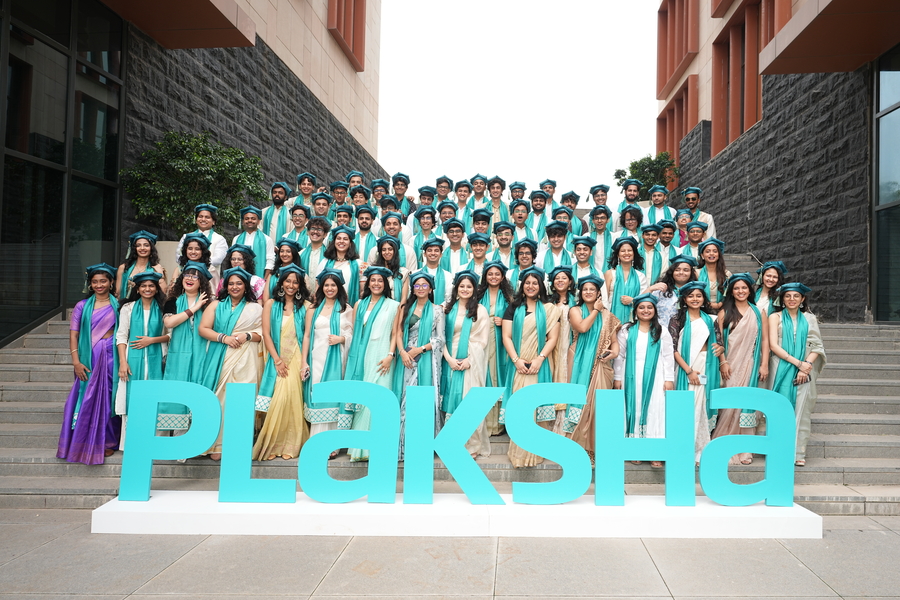
- Plaksha's BTech reflects this interdisciplinarity in practice. Its Freshmore curriculum lets students explore multiple domains before specializing in a major.
On This Page
For decades, engineering education followed a structure that made sense for the world it was built for. Mechanical engineers designed machines. Electrical engineers built circuits and power systems. Computer scientists wrote software.
But the nature of engineering problems has changed.
Today’s technological systems rarely belong to a single field. An autonomous vehicle is a robotics problem, a sensing problem, and a software problem. An AI-powered medical diagnostic platform requires statistical modeling, cloud infrastructure, and healthcare knowledge. Even consumer products now rely on hardware, software, and behavioral design operating together.
The boundaries between disciplines are becoming harder to draw because real-world systems themselves are becoming deeply interconnected.
However, while most real-world problems no longer belong to one branch, many engineering degrees still do.
In India, the traditional model of picking a branch on Day 1 is creating a gap between education and industry expectations. Companies are increasingly looking for engineers who can think across systems rather than within isolated silos.
For engineering aspirants today, understanding interdisciplinary engineering education and the opportunities it creates is becoming an important consideration.
What Is Interdisciplinary Engineering?
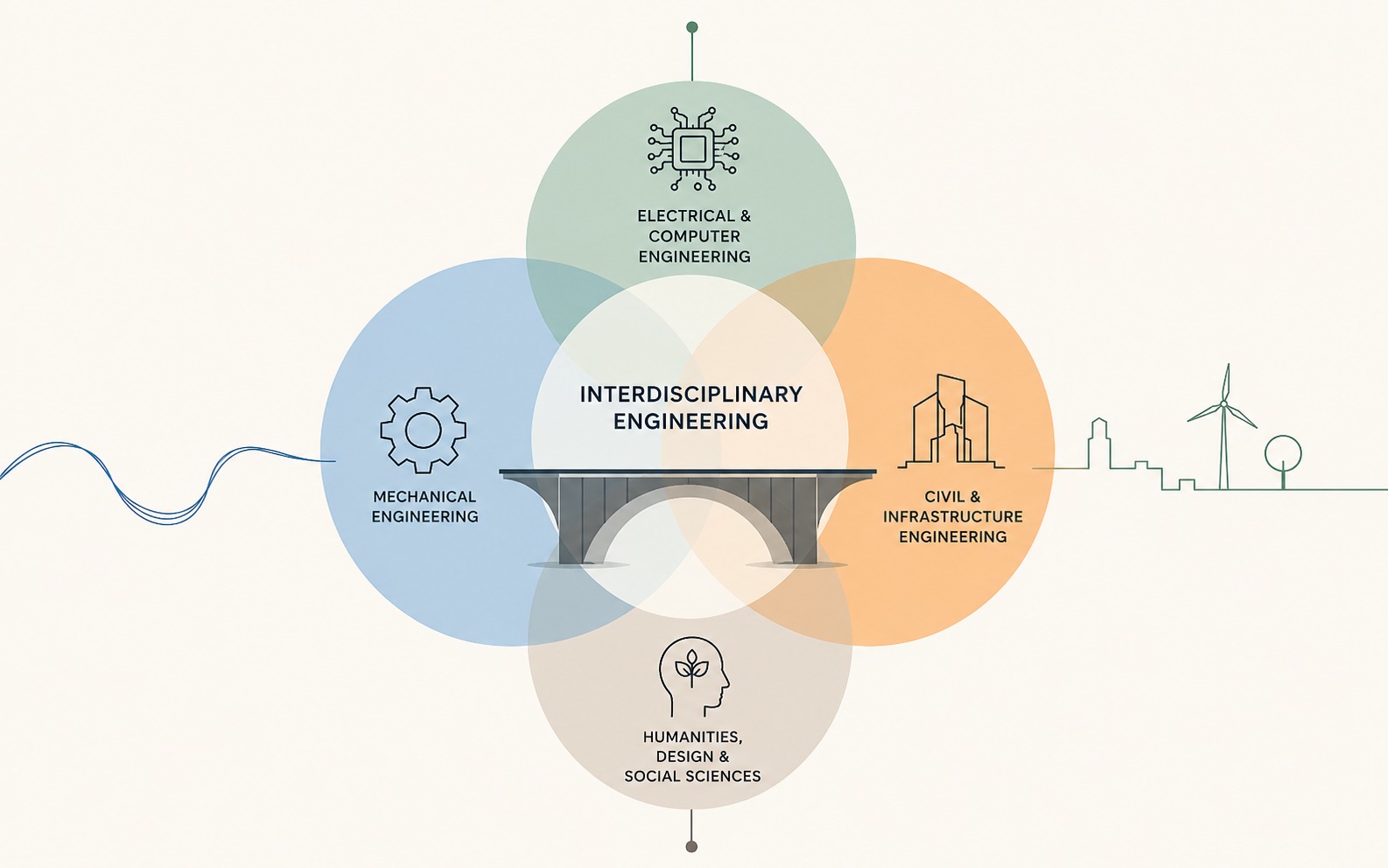
Interdisciplinary engineering is an approach to learning and problem-solving that combines ideas and knowledge from multiple engineering and non-engineering disciplines. Instead of treating subjects like computer science, electronics, mechanical engineering, biology, or design as completely separate fields, interdisciplinary education focuses on understanding how they work together to solve real-world problems.
In simple terms, interdisciplinary engineering teaches students to think across systems rather than within a single branch.
For example:
- A robotics engineer may work with mechanics, sensors, programming, and artificial intelligence.
- A healthcare technology engineer may combine biology, software, and data science.
- A climate-tech engineer may use engineering, materials science, and analytics together.
Real-world problems rarely arrive neatly divided into branches. Interdisciplinary engineering prepares students to connect ideas across fields and apply them in practical contexts. The goal is not to create engineers who know a little about everything. It is to build engineers who can develop expertise while understanding how different technologies and systems interact.
Benefits of an Interdisciplinary Engineering Education
1. Provides Exposure to AI Applications Across Disciplines
Many students choose engineering branches before fully understanding what those fields involve in practice. Interdisciplinary programs often provide broader exposure through a natural progression, covering computing, mathematics, engineering sciences, data science, and design before students commit to a specialization. This becomes especially relevant in an AI-led world. Rather than treating AI as a standalone subject or an additional specialization, interdisciplinary education allows students to understand how emerging technologies are reshaping different fields and industries.
For students, this means seeing how AI connects with multiple domains through coursework, projects, and practical applications.
Instead of experiencing AI as something added onto a curriculum later, students gain early exposure to the technologies already shaping the future of engineering.
2. It Builds Systems and Design Thinking
Whether building an app, a robot, or a healthcare device, engineers need to understand the end user and the experience being designed for them. Interdisciplinary education helps students develop this perspective, where they learn to think about workflows, usability, system behavior, and long-term performance. This becomes especially valuable in fields such as robotics, smart manufacturing, product engineering, autonomous systems, human-computer interaction, and cloud infrastructure, where technologies increasingly operate as connected systems. As engineering systems become more complex, the ability to understand both the user and the larger system surrounding them becomes an increasingly important skill.
3. It Aligns With How Careers Are Evolving
Many emerging roles no longer fit neatly within traditional engineering boundaries. According to recent employment trends, some of the fastest-growing roles across industries reflect this shift:
Most In-Demand Industry Roles
| Industry | Emerging Roles |
| Automotive | EV Design Engineer, Battery Technology Engineer, Autonomous Driving Engineer, EV Software Engineer |
| Biotechnology | Computational Biologist, Bioinformatics Scientist, AI Engineer – Drug Discovery, Synthetic Biologist, Biomedical Engineer |
| Aerospace | Aviation Cybersecurity Specialist, Aerospace Engineer |
| Defence | Drone Operators & Technicians, Advanced Weapon Systems Engineer, Satellite Communications Engineer |
| Information Technology | AI/ML Engineer, Data Scientist, Cloud Architect, DevOps Engineer, Cybersecurity Engineer |
| Pharmaceuticals | Clinical Research Scientist, Biostatistician, Clinical Data Manager |
| Semiconductors | IC Design Engineer, RF Engineer, Verification Engineer, Physical Design Engineer |
| Telecom | 5G Network Engineer, IoT Solutions Architect, Cloud Architect |
| Logistics | Logistics Technology Specialist, Fleet Operations Manager, Logistics Data Analyst |
| Agriculture | Precision Agriculture Specialist, AI-enabled Agronomist, Agricultural Data Scientist |
| Source: India Decoding Jobs 2026 Report |
|
Many of these roles sit at the intersection of multiple fields. A computational biologist combines biology and computing. Autonomous driving engineers work across AI, sensors, and systems design. Precision agriculture increasingly blends data science, analytics, and environmental systems. For students evaluating engineering pathways today, careers are becoming increasingly difficult to fit into neat categories. The ability to work across disciplines is increasingly becoming part of the role itself.
Interdisciplinary Engineering Courses in India
As industries change, engineering education in India is also starting to evolve. Universities and education bodies are recognizing that many modern careers require skills from more than one field. To support this shift, AICTE has introduced initiatives that encourage interdisciplinary learning through flexible electives, minor degrees, AI-focused learning, and industry projects. As a result, students today have more opportunities to explore programs that combine different disciplines and emerging technologies.
Some interdisciplinary engineering programs currently offered in India include:
- Robotics and Automation Engineering: Combines computer science, electronics, and mechanical engineering to build robots and intelligent systems.
- Mechatronics Engineering: Brings together mechanical engineering, electronics, sensors, and computing.
- Data Science and Machine Learning: Combines computer science, mathematics, statistics, and artificial intelligence.
- Biomedical and Bioengineering: Uses engineering and biology together to develop healthcare and medical technologies.
- Cyber-Physical Systems: Focuses on connected systems that combine software with real-world machines and devices.
- Energy Systems Engineering: Combines multiple engineering fields to work on energy and sustainability challenges.
- Smart Manufacturing: Integrates manufacturing with automation, sensors, and digital technologies.
While many of these programs first became popular at the postgraduate level, more universities are now introducing interdisciplinary options at the BTech level as well. Students can secure admission for such BTech programs either through JEE Main/Advanced or through the university-specific entrance exam.
Interdisciplinary Education for a Changing World
As technology evolves and industries become more interconnected, engineering education is also beginning to move beyond rigid branch structures. The shift is not simply about adding new subjects or specializations. It is about creating learning experiences that reflect how real-world problems are solved: across systems, disciplines, and teams.
Plaksha’s interdisciplinary BTech program is built around this idea. Through the Freshmore Year, students explore multiple domains before choosing a specialization, while building foundations in areas like computing, mathematics, data science, and engineering systems. Combined with project-based learning and hands-on experiences, the approach is designed to help students move beyond narrow disciplinary boundaries and prepare for emerging careers across AI, robotics, data science, and other fast-evolving fields.
For students looking to understand what interdisciplinary engineering can look like in practice, explore the Plaksha BTech program.