
Inside Plaksha’s First Graduating Class: 55% Enter, AI, ML, and Data Science Roles
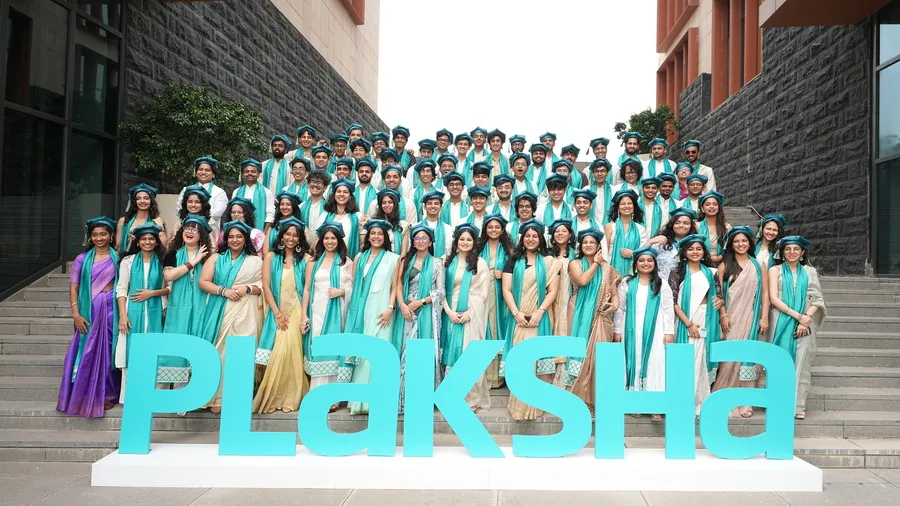
Key Takeaways
- More than half (55%) of Plaksha's founding BTech Class of 2025 secured roles in software engineering, AI/ML, and data science.
- Graduates pursued diverse career paths across technology, consulting, finance, analytics, startups, research, and higher education.
- The placement season included 55 participating companies, with an average CTC of ₹20 lakh per annum and the highest package reaching ₹65 lakh per annum.
- Alongside industry placements, 27% of students chose higher education and research at globally recognized universities.
- Plaksha's interdisciplinary approach prepares students for evolving engineering careers that combine technical expertise with analytical and problem-solving skills.
For students considering a BTech today, one question has become difficult to ignore: If AI can write code, what exactly is an engineering degree preparing you to do?
The first graduating class of Plaksha University offers a practical way to answer that question, through what students actually go on to do after graduation.
The Class of 2025 consisted of 81 students who moved into roles across software engineering, AI/ML, data science, consulting, product, finance, startups, and research. Together, these outcomes reflect not just placement, but the kinds of problems graduates are stepping into.
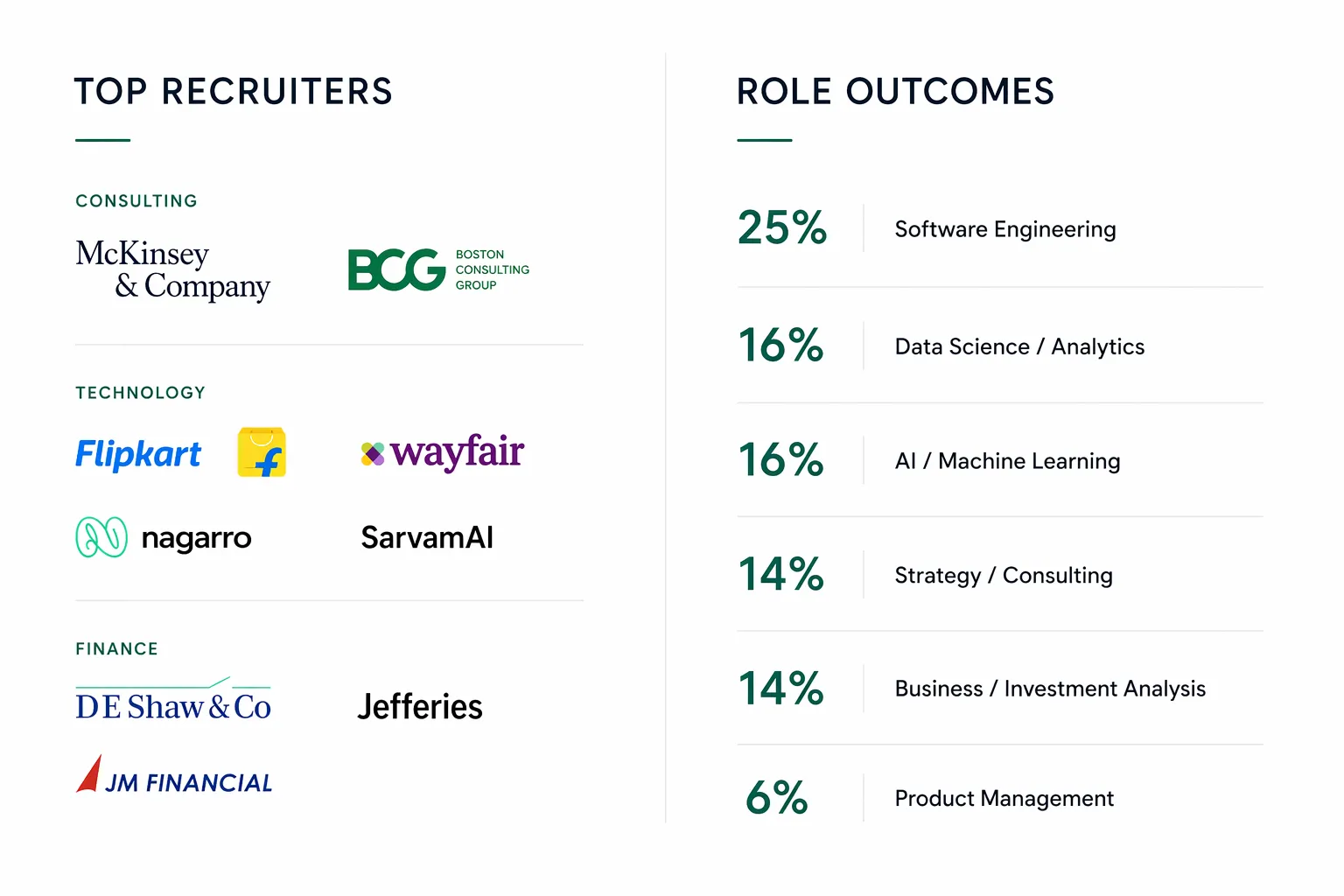
Role Outcomes: Where Students Landed
| Role | Share |
|---|---|
|
Role Software Engineering |
Share 25% |
|
Role Data Science / Analytics |
Share 16% |
|
Role AI / Machine Learning |
Share 14% |
|
Role Business / Investment Analysis |
Share 16% |
|
Role Strategy / Consulting |
Share 14% |
|
Role Product Management |
Share 6% |
|
Role Founder’s Office |
Share 6% |
Over half the cohort (55%) entered software, AI, and data roles. A further 30% moved into consulting, analytics, and business-facing positions.
This spread shows that outcomes are not concentrated in a single track. Students are moving across both core technical and applied, decision-oriented roles.
Sector Distribution: Where They Work
| Sector | Share |
|---|---|
|
Sector Startups |
Share 31% |
|
Sector Technology |
Share 22% |
|
Sector BFSI |
Share 19% |
|
Sector Consulting |
Share 14% |
|
Sector Analytics |
Share 8% |
|
Sector Private Equity / VC |
Share 6% |
The placement cycle saw 55 companies participate, 32 hire, and 81 roles offered.
A third of the cohort entering startups, alongside strong representation in technology, finance, and consulting, reflects a wide spread of career paths rather than a single dominant pipeline.
Companies: Who Hired
Students were hired by organizations including:
- McKinsey & Company, Boston Consulting Group
- Flipkart, Wayfair, Whatfix, Nagarro
- DE Shaw, Jefferies, JM Financial
- Fractal Analytics, GlobalData
- Pixxel, Sarvam AI, LAT Aerospace
These organizations span consulting, technology, finance, analytics, and high-growth startups, indicating demand across both established firms and emerging companies.
The Plaksha Class of 2025, the university’s first graduating class, saw strong outcomes across technology and business roles in the placements 2025 cycle. Graduates moved into AI/ML jobs, data science roles, software engineering, consulting, finance, product, and startup opportunities, reflecting the breadth of career paths available to Plaksha alumni.
Compensation and Placement Metrics
| Metric | Outcome |
|---|---|
|
Metric Average CTC |
Outcome ₹20 lakh per annum |
|
Metric Median CTC |
Outcome ₹17 lakh per annum |
|
Metric Highest CTC |
Outcome ₹65 lakh per annum |
|
Metric CTC Range |
Outcome ₹8–65 lakh per annum |
|
Metric Top 25% Avg |
Outcome ₹34 lakh per annum |
|
Metric Top 10% Avg |
Outcome ₹48 lakh per annum |
All 52 students who opted for industry roles were placed, while 27% (22 students) chose higher education and research. A smaller set of students also pursued entrepreneurship, with 4 student-founded ventures emerging from the cohort.
Admissions for higher studies include institutions such as Carnegie Mellon, University of Pennsylvania, UC San Diego, NYU, and the University of Chicago.
Taken together, these outcomes point to a cohort splitting across industry, research, and startups rather than converging on a single outcome.
Here's what Liza Wahi, who secured an offer from McKinsey, had to say about her journey.
What This Suggests about BTech Today
The outcomes of this first cohort point to a shift in what an engineering degree needs to prepare students for.
As AI automates parts of coding and development, engineering roles are expanding beyond implementation. Students are increasingly expected to work across systems, data, and decision-making contexts.
That shift is reflected here in the mix of roles, the spread of sectors, and the balance between industry and research pathways.
At Plaksha, this is approached directly: technology and innovation are treated as tools to solve real problems, and students are trained to work across multiple lenses, technical, analytical, and applied.
Three Career Directions Emerging
- Building Technology
Software engineering, AI/ML, and data science roles. - Applying Technology
Consulting, analytics, product, and finance roles. - Advancing Knowledge
Higher education and research, chosen by 27% of the cohort.
Students are not limited to one path. They are able to move across these directions depending on interest and opportunity.
Access and Admissions
The Class of 2025 also reflects a strong emphasis on access and diversity.
- ~85% of students received scholarships or financial aid
- Students came from 43 cities across 20 states
- ~35% of the cohort are women
Admissions are need-blind, with support based on merit, financial need, and leadership potential.
What This Adds Up To
From this first cohort, a few things are clear.
Students are not entering just one kind of role. They are distributed across technology, consulting, finance, startups, and research. Employers across sectors are hiring into roles that require both technical ability and broader problem-solving skills.
And a meaningful share of the cohort is choosing to go deeper — into research and advanced study.
For students considering a BTech today, the question is shifting.
Not just “Will this degree get me placed?”
But “What kinds of problems will I be ready to work on?”
Applications
Applications are open for the upcoming BTech intake.
About the Author
Dhruv Govind
The average CTC for the BTech Class of 2025 was ₹20 lakh per annum, with a median CTC of ₹17 lakh per annum.
The highest offer in the 2025 placement cycle was ₹65 lakh per annum.
Students have been hired by companies such as McKinsey & Company, Boston Consulting Group, Flipkart, Wayfair, DE Shaw, Fractal Analytics, and several startups.
Graduates take up roles such as Software Engineer, AI/ML Engineer, Data Scientist, Product Manager, Business Analyst, and Strategy Consultant.
Yes. Students complete internships across technology, consulting, finance, and research organizations during their degree.
Yes. Around 85% of students receive scholarships or financial aid.