
Freshmore. It is not a typo.
Key Takeaways
- Freshmore reimagines the first three semesters of engineering education at Plaksha.
- Students build strong interdisciplinary foundations before selecting a major.
- Experiential learning through Makerspace, Innovation Lab, and Grand Challenges is central to the curriculum.
- The approach prepares future technology leaders with technical depth and human-centered thinking.
Introducing the Freshmore Experience
As you know, the admissions for Plaksha’s inaugural undergraduate B.Tech programs are underway. The academic session for the incoming Class of 2025 will commence later this year, and it will be a historic moment. After all, there can only ever be one Founding Cohort. The pathbreakers, whom we have been interviewing these past months have completely bowled us over with their zeal, their intellect and most of all the way they perceive the world around us: so full of possibilities and ready for change.
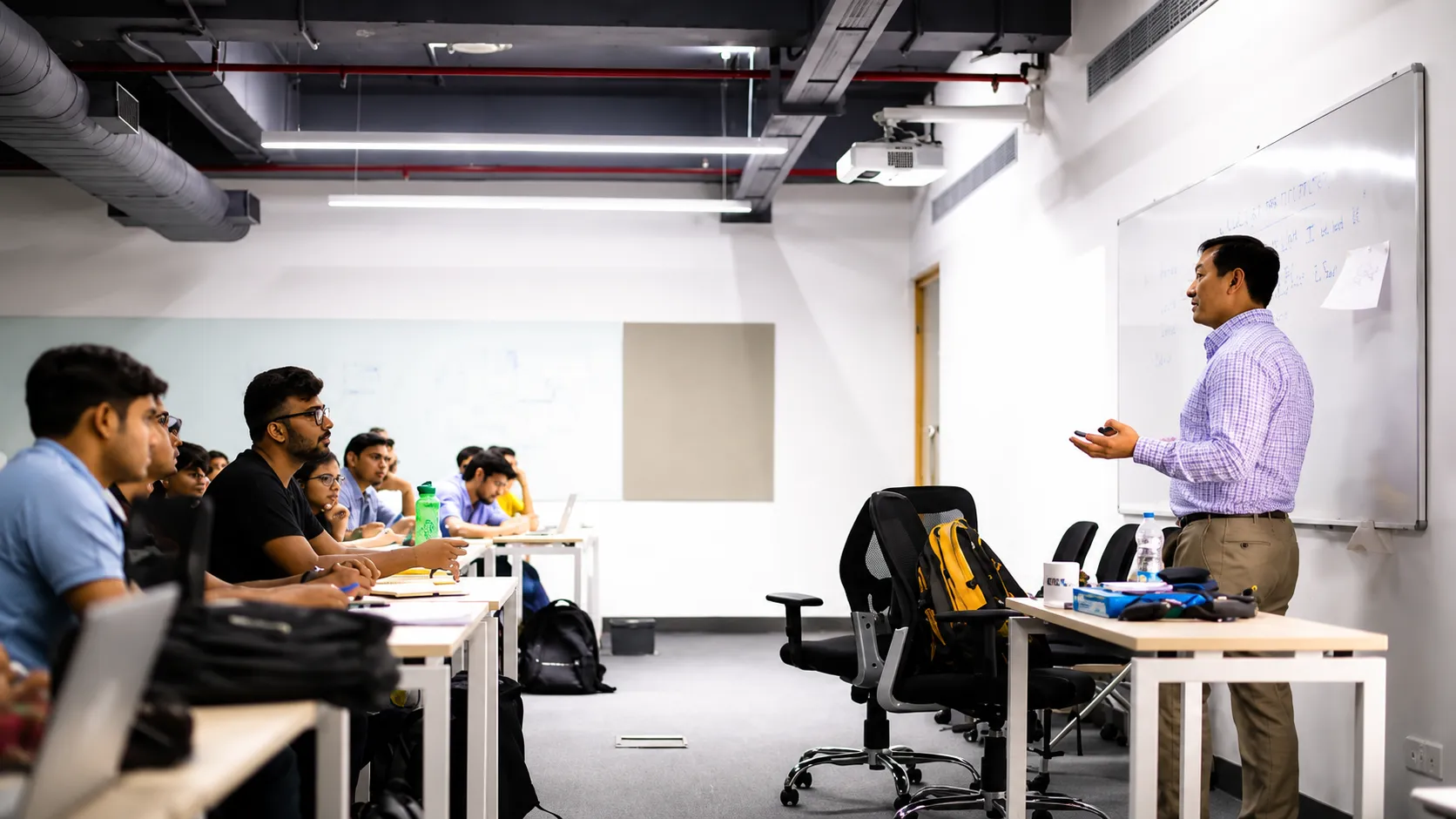
A key element of our curricular design is the Freshmore Course Sequence. But wait, what’s Freshmore? Does it mean Freshman year or Sophomore year? What does it have to do with curriculum? We address a few of these popular questions, and more, below:
Did we just coin Freshmore?
We wish that were true, but the credit goes to Dr. Sanjay Sarma, Vice President of Open Learning at Massachusetts Institute of Technology. It combines the terms Freshman + Sophomore, which are popularly used to define the first and second year of study in American universities and high schools. It has also been adapted by progressive universities like Singapore University of Technology and Design and now by Plaksha.
What is different about Freshmore?
Learning is an evolving journey, one that should be guided rather than dictated. Most engineering schools in India do not give their students the freedom to choose their majors. Students usually get assigned a major based on a singular rank or score. This often means that they don’t get the opportunity to explore different fields, and decide what they are truly interested in.
The Freshmore Course Sequence does away with these traditional and often restricting academic practices. At Plaksha, all incoming undergraduate students will have the same courses in the first 3 semesters. These courses establish a platform for students to build strong foundations in math, data and computational skills. Furthermore, it enables students to get a flavor of various engineering disciplines, and develop an interdisciplinary mindset by engaging with courses in communication, design thinking, economics and the liberal arts.
The Freshmore year serves as a foundation year for the B.Tech. program, giving students time to explore different disciplines before they choose their engineering major. This exploratory learning approach allows students to build strong foundational skills while discovering the areas of engineering and technology they are most passionate about.
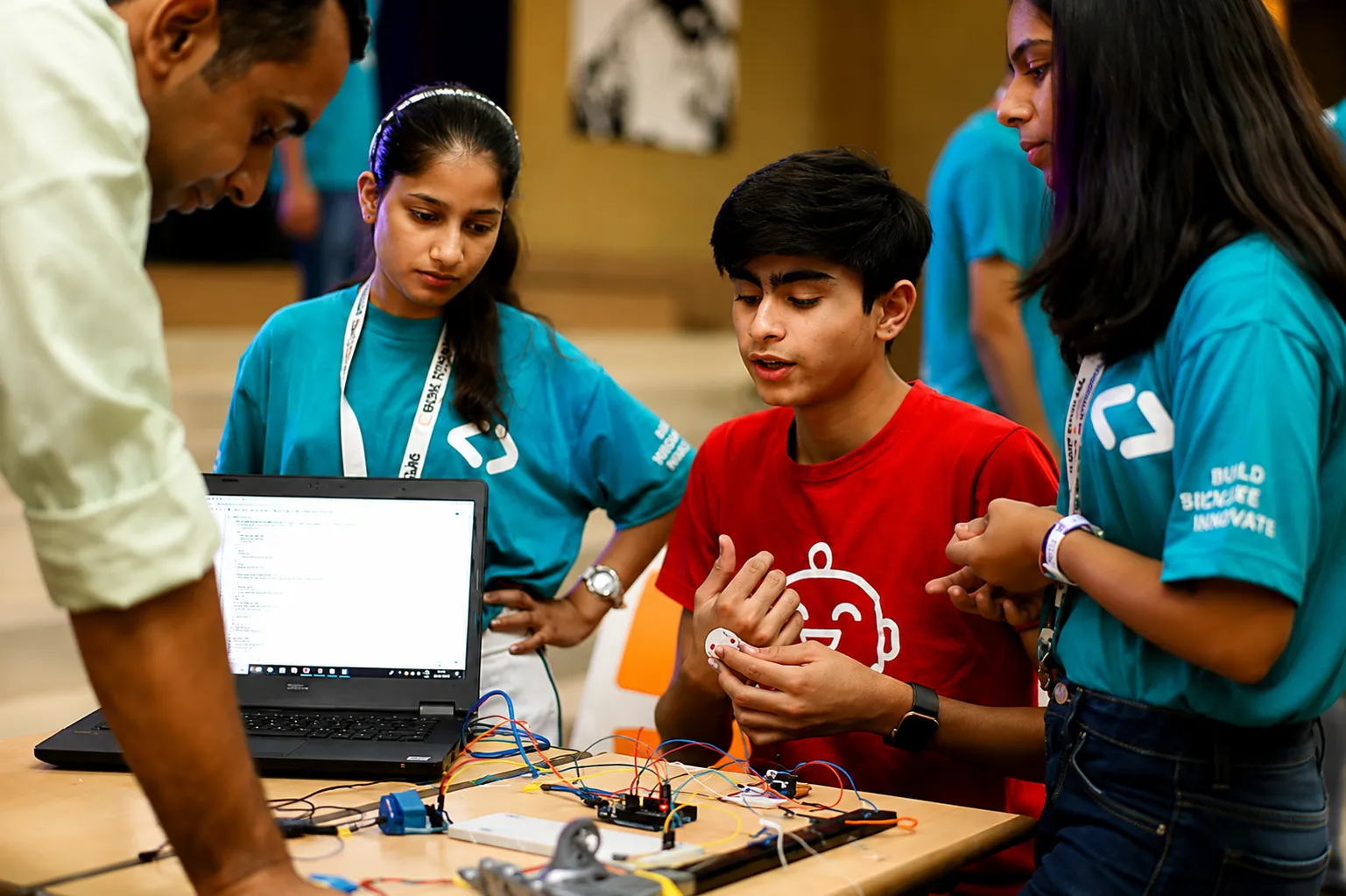
Creating tech that makes a difference
Plaksha’s signature Makerspace and state-of-the-art labs are also a core component of the Freshmore experience. In addition to the Innovation Lab and Grand Challenge sequence which runs throughout the eight semesters, most Freshmore courses will also encourage students to learn by doing and to be able to apply what they learn in their lectures to create real world impact through solutions and innovations.
So it’s not about marks and ranks determining which major students get selected for. Rather, they arrive at the choice of their major after three semesters, based on what they enjoy, after experiencing all disciplines (in the literal sense!) themselves, and also establishing core foundational competencies in areas that will define the 21st century.
Why did Freshmore make it to the Plaksha pedagogy and learning structure?
We’d like to take a leaf out of our Academic Advisor, Nobel laureate Dr. Abhijit Banerjee’s convocation speech for Plaksha Tech Leaders Fellowship 2020 batch:
‘As technology leaders with the opportunity to create lasting change, you hold the responsibility to be the human element in the technology story and the technology element in the human story’
With Plaksha, we’ve always kept the larger picture at the forefront of our endeavors, which is why the goal is not to create more engineers; the goal is to nurture creators of tomorrow, who can solve Grand Challenges and have a holistic understanding of the world we live in. Inculcating often-ignored areas like Humanities, Ethics and Design in the technology-first curriculum a of B.Tech program gives us all, as a society, a fighting chance for the critical challenges the coming generations will be facing: Economic, Environmental, Public Health and many more complex, wicked problems.
The Freshmore is a dynamic process at the core of Plaksha’s ethos; an environment for students to Unlearn, Learn and Relearn through their various courses, projects, peer interactions, and other activities. By providing this interdisciplinary platform, we hope to foster an army of changemakers tackling the problems of tomorrow, with both empathy and technology skills in their arsenal.
About the Author
The UG Team develops stories showcasing Plaksha University's undergraduate experience, innovative curriculum, student life, and academic initiatives.
Frequently Asked Questions
Freshmore blends ‘freshman’ and ‘sophomore,’ terms commonly used by American universities and high schools. At Plaksha, it refers to the first three semesters of the BTech program, common to every undergraduate before they specialize in a major.
Students are better placed to choose a major after three semesters of studying across computing, mathematics, engineering, economics and the liberal arts than at the point of admission. A faculty advisor guides them through the choice in year two.
Freshmore builds foundations in mathematics, data and computational skills. It also covers communication, design thinking, economics and the liberal arts, so students develop an interdisciplinary mindset alongside the technical core.
In a fixed-branch BTech, a student's branch is set at admission on the basis of an entrance rank and stays fixed for all four years. At Plaksha, all undergraduates take the same courses for three semesters and work across disciplines, then declare a major in year two with guidance from a faculty advisor. The choice of major follows from what a student has studied rather than from a rank recorded before they arrived.
The Makerspace and labs make Freshmore hands-on from the first semester. In Design and Innovation, a Freshmore course on human-centered design, students learn engineering drawing, materials and processes, and build working prototypes in the Makerspace. Laboratory classes run weekly along with lectures in courses such as Engineering Math in Action and Mathematics of Uncertainty. Courses like Foundations of Physical World is taught through demonstrations, experiments and projects.
The Freshmore curriculum spans six areas: Computing and Data Science, Humanities, Self and Leadership, Innovation Lab and Grand Challenge Studio, Quantitative Analysis, Technical Core, and Indian Knowledge System integration. Its courses draw on all four BTech majors, so students study across every discipline the university teaches before choosing one.