Havells Research Building
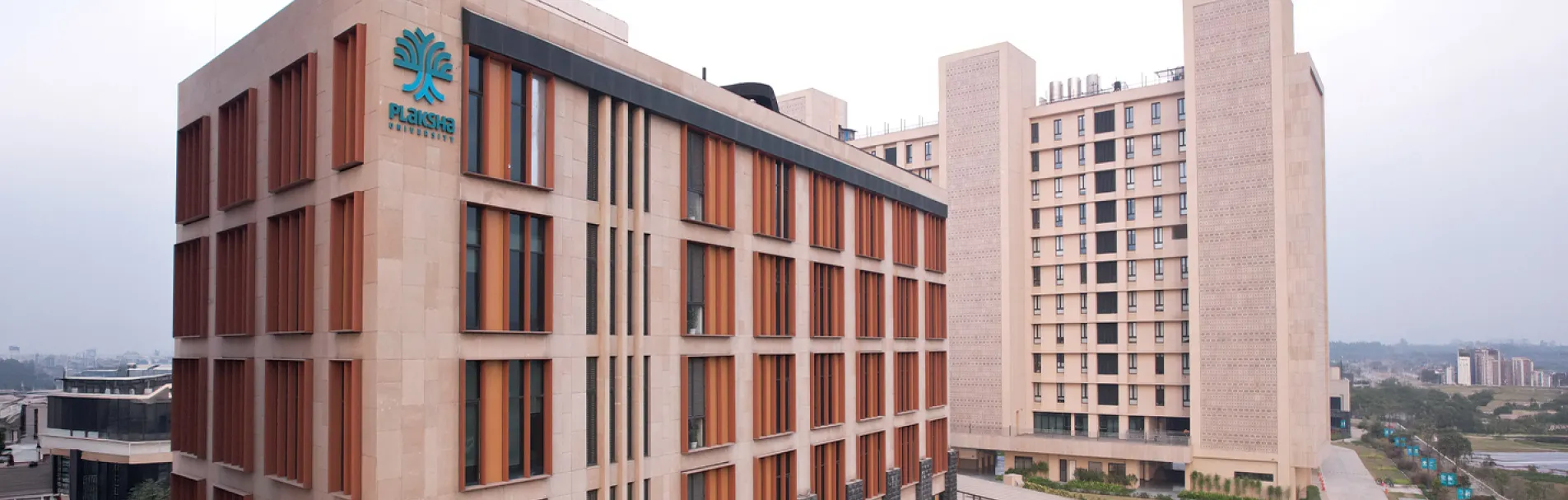
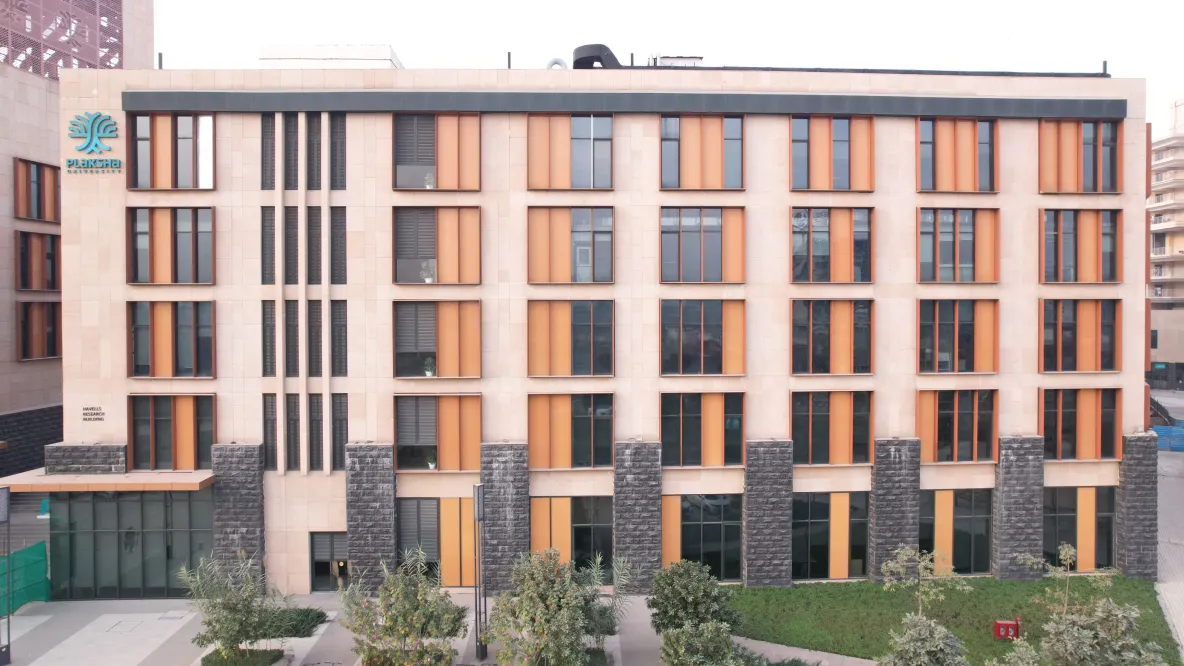
A cornerstone of Plaksha's research ecosystem, the Havells Research Building brings together tinkering, prototyping, collaboration, and interdisciplinary research under one roof.
Overview
Designed as a living lab for Plaksha's mission to reimagine technology education, the
Havells Research Building is built to move learning beyond the classroom.
Lecture rooms, faculty offices, conference rooms, and dedicated maker spaces sit
alongside specialized laboratories, creating a seamless flow from teaching to
experimentation.
The building supports research and innovation across clean energy, water security,
biotechnology, IoT systems, advanced manufacturing, robotics, and environmental
technologies.
Key Highlights
Featured Spaces
Makerspace
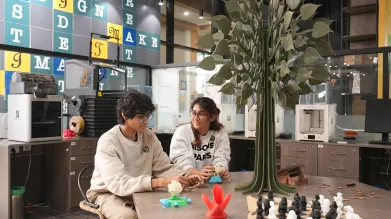
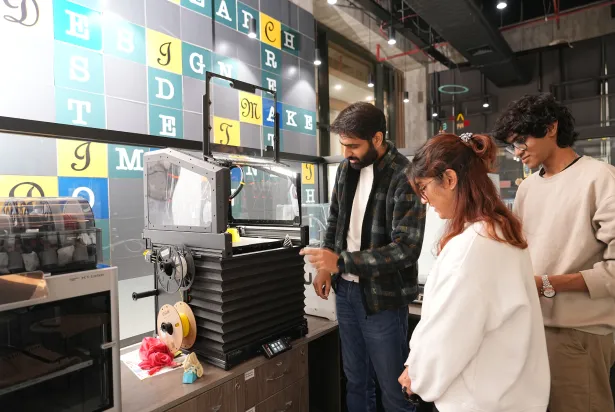
One of the most active hubs in the building, the
Makerspace supports design, prototyping, and
iteration through 15+ specialized zones across
about 8,500 sq ft. Students use 3D printing, laser
cutting, and carbon fiber printing to develop
solutions for coursework, the Innovation Lab Grand
Challenge, and independent projects.
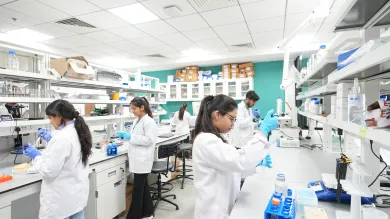
Physical World Lab
A dedicated lab for physics and allied fields, supporting experiment-based learning and prototyping. It has also enabled workshops and training sessions for high school students, university students, and STEM educators from the Tri City area.
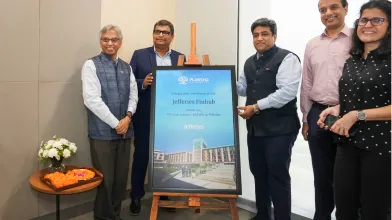
Jefferies FinHub
A hands-on space for financial learning that uses
market data tools and industry collaboration.
Students engage with real-world contexts through
events such as Stockathon, M A Masters, and guest
sessions on crypto, decision analytics, and
entrepreneurial finance.
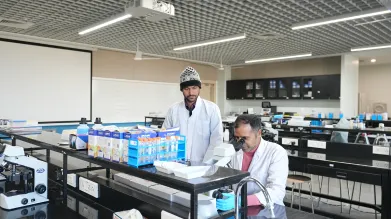
Anthem Biosciences Nature's Machines Lab
A hub for biological literacy through experiments in
genetic engineering, bioinformatics, and related
areas. The lab has supported outreach to high
school students, STEM educators, and admissions
counselors through training and engagement
sessions.
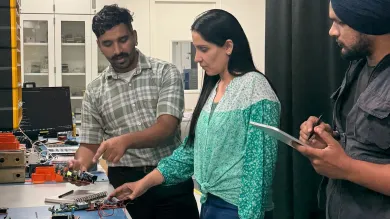
Dixon IoT Lab
A space for connected systems and urban
monitoring, including projects around traffic
density, speed monitoring, and sensor based
solutions for cities.
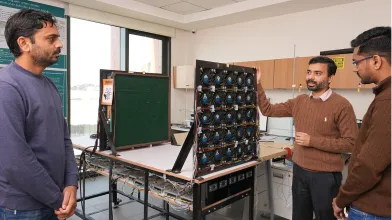
Clean Energy Lab
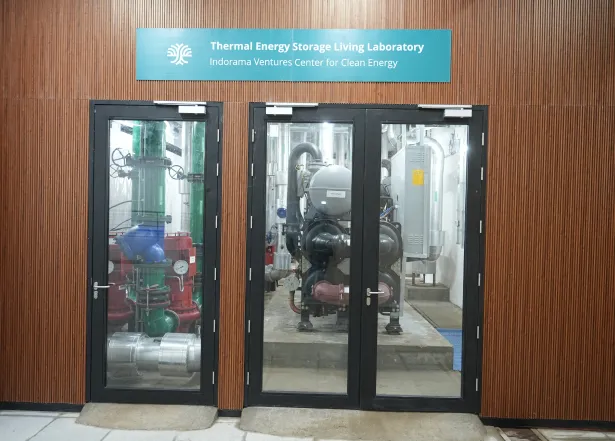
Anchored by the Indorama Ventures Center for
Clean Energy, this space supports prototyping and
campus based testing for a net zero, energy secure
future.
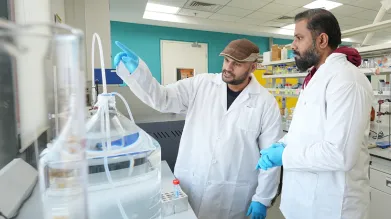
Water Technology Lab
Focused on sustainable access to water and reliable on campus testing, with projects that can scale from the university to wider communities.
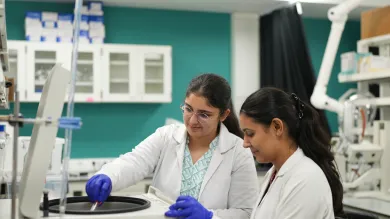
Cell and Molecular Bio Lab
Supports precision healthcare research, biomarker
studies, and rapid detection technologies.
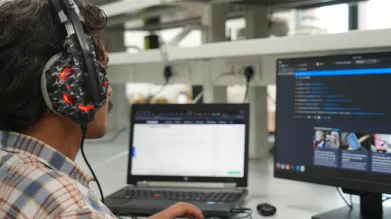
Coding Cafe
A collaborative space for problem-solving, mentoring, and project work that supports research teams and student builders.
Research Themes and Living Lab Projects
The Havells Research Building is not only a place for lab work. It is a living lab where research is connected to campus operations and community needs.
Examples include thermal energy storage work with Tabreed to support air conditioning needs in the student residence, smart farm monitoring in collaboration with CNH, urban traffic monitoring with Punjab Police, underwater robotics, and optical sensors for heavy metal detection.
Across these projects, the focus remains clear: build technologies that are rigorous, useful, and relevant to India and the Global South.
Experiential Learning in Action
Students use the building through capstone projects, the Innovation Lab
Grand Challenge, entrepreneurship courses, and research internships.
Project based learning has led to work such as a non invasive diabetes
detection kit using urinalysis reagent strips, robotics innovations for the
Plaksha AUV Challenge, and student presentations in the Plaksha
Summer Entrepreneurship Program.
The result is a learning environment where ideas move quickly from
concept to prototype, and from prototype to impact.
A Hub for Collaboration and Outreach
The building regularly hosts workshops, distinguished lectures,
conferences, guest sessions, fireside chats, and innovation showcases
that bring together students, researchers, founders, educators, industry
leaders, and policymakers.
It also serves neighboring schools and communities through STEM
outreach, faculty training, and student visits that widen access to hands
on learning.
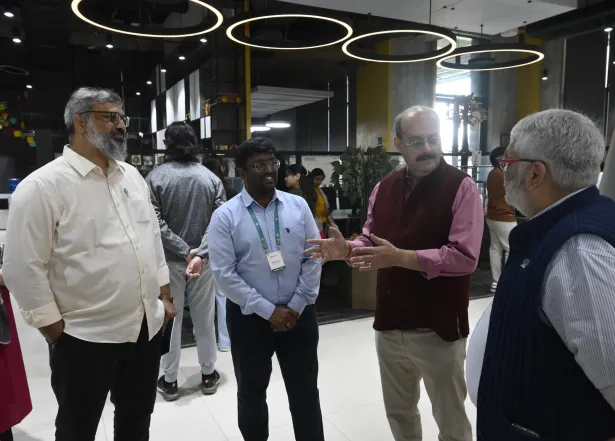
With more than 1,000 stakeholders engaged, the building has become a
meeting point for ideas, partnerships, and shared ambition.