
About
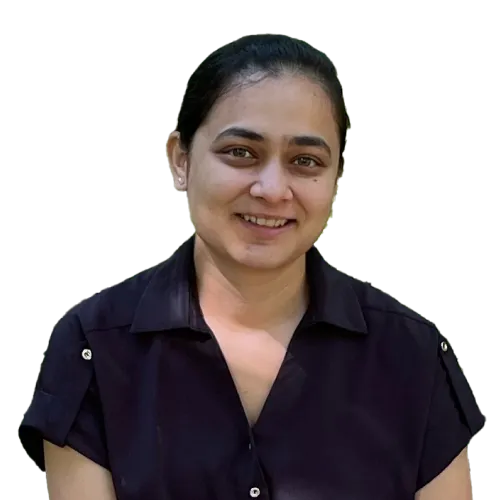
Dr Ramneet Kaur is an Adjunct Faculty at Plaksha. Ramneet is an Advanced Computer Scientist II at SRI International’s Computer Science Lab in Menlo Park, where she leads high-stakes AI research at the intersection of safety and autonomy. She currently serves as the Principal Investigator (PI) for DARPA’s TIAMAT program, focusing on closing the "sim-to-real" gap to ensure robotic agents can perform complex, day-to-day tasks in the physical world. Her leadership extends to the broader academic community, where she has been appointed Program Chair for AAAI 2025 and Area Chair for UAI 2026, reflecting her standing as a leading voice in the next generation of artificial intelligence.
Dr Ramneet earned her PhD from the University of Pennsylvania in 2023 under the supervision of Prof Insup Lee. Her doctoral research focused on the reliable deployment of AI in safety-critical domains, specifically developing tools to monitor distribution shifts and physical attacks on neural networks. By providing rigorous statistical guarantees on false alarm rates and quantifying performance in novel environments, her work adProfesses the fundamental "assurance gap" that prevents deep learning models from being safely integrated into real-world systems. Her excellence in this field led to her selection as one of the 41 top CPS Rising Stars in the United States in 2023, and Distinguished Paper Award and nominations at the International Conference on Cyber-Physical Systems in 2022, 2023, 2025.
At SRI, her recent technical focus has shifted toward the alignment and reliability of Large Language and Multi-Modal Models. She has pioneered methods for integrating uncertainty quantification into generative AI, ensuring these models remain interpretable and dependable even when deployed in dynamic or unpredictable environments where errors could have severe consequences. Her research is extensively published in top-tier venues including NeurIPS, ICML, AAAI, EMNLP, and HSCC, as well as the ACM Transactions on Cyber-Physical Systems. She has been awarded Spot Awards at SRI for her contributions to the DARPA ANSR program in 2024 and publishing in top-tier AI conferences. Beyond her core research, she applies her expertise to social-impact initiatives, such as leveraging machine learning to classify educational content for early childhood development.